Get Predictable Growth for Your Home Service Business — Local SEO, Lead Gen, and Automation That Work
Many local contractors and home service companies struggle to keep a steady flow of qualified leads because visibility, response speed, and conversion processes live in different places. When you combine local SEO, paid advertising, marketing automation, and AI-powered personalization, growth becomes predictable: more visibility, better lead quality, and faster booking. This guide lays out practical, field-tested tactics for home service marketing — from local SEO and lead generation for contractors to website UX, reputation management, AI use cases, and email/SMS sequences that retain customers. Lead Nurture Close Web Marketing centers on AI-driven local SEO, high-converting websites, our CRM (LeadNurtureClose 360®), authority-building content, and targeted paid ads inside a Home Services Omnipresence Marketing System (Essentials, Accelerator, Enterprise). Read on for checklists, comparison tables, and automation blueprints you can apply this month to book more jobs and lift average ticket values.
Unlock Predictable Growth for Your Home Service Business
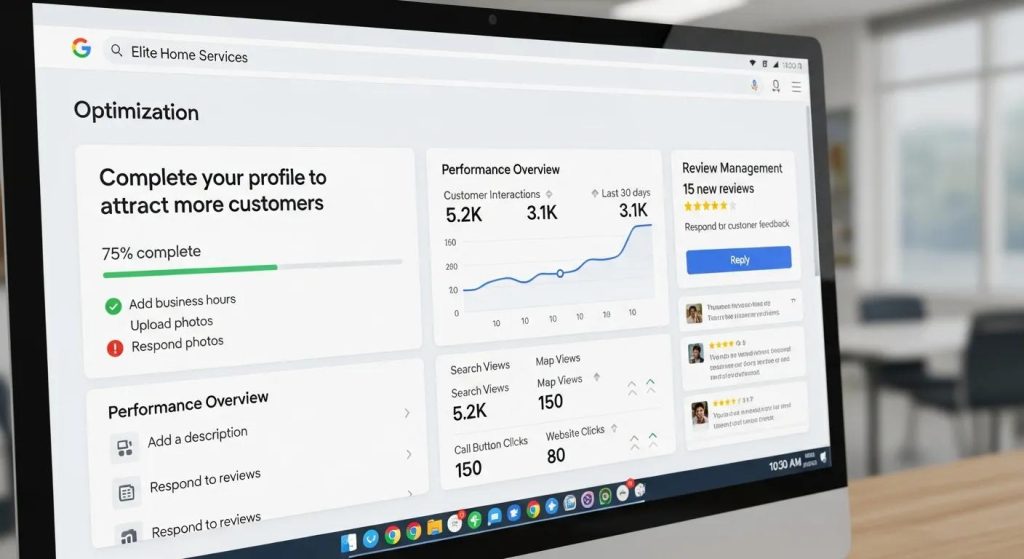
Local SEO helps nearby customers find you by optimizing your Google Business Profile, targeted landing pages, and review activity to match search intent and drive bookings. It works by improving three signals: relevance (service keywords and service-area pages), prominence (reviews, citations, links), and proximity (consistent NAP and local content). Structured data and local markup make your services and service areas clearer to search engines, increasing clicks and conversions. Below is a short prioritized checklist to implement first, followed by a table that shows the typical impact of each technique.
Local SEO priority checklist:
- Claim, complete, and verify your Google Business Profile to build trust and qualify for the local pack.
- Publish service-area landing pages for neighborhoods and specific service keywords, including service-level schema.
- Start a review-acquisition program to increase review velocity and capture service-specific details.
- Ensure NAP consistency across directories and citations to protect rankings and local map placement.
Those steps create a reliable foundation for better visibility and more qualified inbound calls. Next, see how each local element typically affects business results.
Different local optimization elements produce specific business outcomes and measurable impact.
| Element | Attribute | Expected Impact |
|---|---|---|
| Google Business Profile | Complete categories, services, posts, photos | Greater local-pack presence; more calls and direction clicks |
| Local landing pages | Service-focused keywords + schema | Higher organic clicks and form submissions from target areas |
| Reviews & reputation | Volume, velocity, star rating | Improved rankings and stronger CTR from trust signals |
| Citations & NAP consistency | Directory listings and structured citations | Fewer ranking issues and more accurate map placement |
How to Optimize Your Google Business Profile for Maximum Visibility
Start with a fully verified Google Business Profile and keep it fresh. Fill every relevant field — primary/secondary categories, service list, service areas, business description, and attributes — so Google clearly understands what you do. Post recent photos, publish timely posts (offers, project highlights, seasonal tips), and use Q&A and booking links to cut friction for customers. Maintain NAP consistency across your site and citations to avoid suspensions and ranking drops. Regular GBP upkeep produces steady visibility gains and compounds with on-site SEO work.
What Role Do Online Reviews Play in Local SEO Success?
Reviews shape rankings and buyer decisions by signaling trust, recent activity, and service quality. Volume, recency, and review content matter for both algorithms and customers. Ask for reviews right after a job with simple instructions and templates that prompt specific, keyword-rich details (service performed, neighborhood, tech name). Reply promptly to every review — positive or negative — to show responsiveness and sometimes win back unhappy customers. Track review velocity and sentiment to spot service issues early and protect local rankings. In short, proactive review programs are a major lever for better placement and higher conversion.
How Can Home Service Contractors Generate High-Quality Leads Through Digital Marketing?
High-quality lead generation for contractors uses layered channels: intent-driven organic search, high-intent local ads, and conversion-optimized landing pages that pre-qualify prospects before they reach field teams. Organic SEO and Local Services Ads capture different buyer intents while paid search and social scale demand; automation and CRM workflows guarantee fast follow-up and accurate lead scoring for prioritizing dispatch. Measure leads by appointment rate, lead-to-job conversion, and job value — not just raw volume — and use attribution to fund the highest-ROI channels. Below is a channel comparison with typical costs and benefits, then tactics to raise lead quality through funnel improvements.
Channel comparison for lead generation and their typical business impacts.
| Channel | Typical Cost/Range | Primary Benefit |
|---|---|---|
| Organic SEO | Low to moderate (time + content) | Sustainable inbound leads with strong lifetime value |
| Google Local Services Ads (LSAs) | Pay-per-lead (market-dependent) | Very high-intent leads with strong conversion rates |
| Google Ads (PPC) | Moderate to high (CPL varies) | Immediate visibility for competitive keywords |
| Facebook/Meta Ads | Moderate (awareness + retargeting) | Good for promotions and seasonal demand |
| Referrals & Partnerships | Low cost | Highest lead quality and trust-based conversions |
Use this table to balance short-term paid programs with long-term organic investment; next, put conversion flows in place to get the most value from each channel. Home service marketing.
When thinking in systems, the Home Services Omnipresence Marketing System is a practical model: Essentials, Accelerator, and Enterprise packages combine SEO, LSAs, paid ads, CRO, and CRM automation to lift qualified leads. The system reduces unqualified inquiries and speeds booking because marketing and operations share unified data and lead-scoring rules. Lead Nurture Close Web Marketing implements this approach using LeadNurtureClose 360® as the CRM backbone to centralize leads, automate responses, and hand off warm prospects to field teams with full context. The result: higher average job value and shorter time-to-book.
Which Paid Advertising Platforms Deliver the Best ROI for Home Services?
Choose platforms based on intent and service type. Google Local Services Ads and Google Ads capture high-intent searchers; Meta ads work well for awareness, local promotions, and neighborhood targeting. LSAs often convert best because they show to users actively hiring contractors. Google Ads gives keyword-level control for services like emergency repairs. Meta performs well for geo-targeted offers but usually needs retargeting to match search-intent CPLs. Prioritize LSAs and search for emergency or high-value services, and keep a smaller budget for social testing. Optimize by aligning ad copy with landing pages, scheduling ads for peak hours, and A/B testing lead forms to reduce friction and boost qualified submissions.
- When to use LSAs vs Google Ads: LSAs for immediate hire-intent queries; Google Ads for broader keyword coverage and promotional campaigns.
- Budget allocation recommendations: Consider starting around 60% search/LSA, 25% social retargeting, 15% testing for new channels.
- Ad messaging and landing page alignment: Match headline offers to landing-page CTAs and keep trust signals visible above the fold.
This platform guidance feeds directly into conversion optimization and automation tactics that capture and qualify leads faster.
How Does Marketing Automation Enhance Lead Nurturing and Conversion?
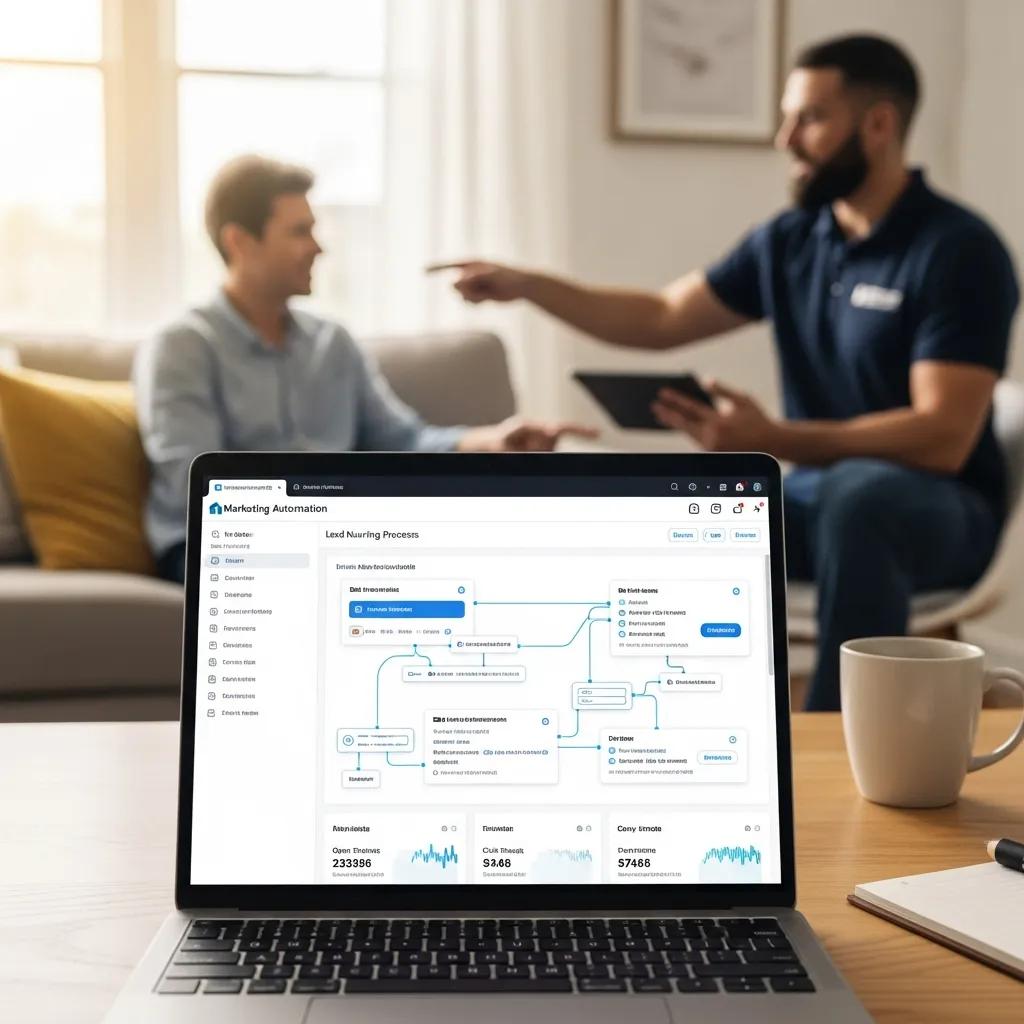
Marketing automation raises conversion by making sure each captured lead gets a fast, relevant sequence of touches that build trust and prompt booking. Automation relies on triggers, segmentation, and scoring to surface leads for human follow-up. Example flow: capture → instant SMS/email confirmation → chatbot qualification → lead scoring (job type, urgency) → nurture drip (email + SMS) → sales alert for top-scoring leads. Automation removes manual delays, keeps prospects engaged while ops schedules the job, and typically boosts booking rates and shortens sales cycles. Rolling these sequences across channels captures intent when it’s strongest and keeps momentum until a job is booked.
What Are the Top Home Service Marketing Strategies to Accelerate Business Growth?
To accelerate growth, combine search visibility, paid demand capture, CRO, reputation work, and repeatable systems. Visibility fills the funnel, paid channels accelerate demand, CRO converts more visitors, reputation management builds trust, and systemization (automation + CRM) scales without proportional cost increases. Below is a ranked list of practical tactics you can execute this quarter, including a high-level approach we use at Lead Nurture Close Web Marketing.
Top home service growth strategies:
- Local SEO foundation: GBP optimization, targeted service pages, and citation management to capture organic intent.
- High-intent paid capture: LSAs and focused PPC campaigns optimized by job value.
- Conversion rate optimization: simplified booking forms, click-to-call, and clear trust signals.
- Authority content and video: service walkthroughs, local case studies, and short how-to clips to build credibility.
- Reputation management: automated review requests and consistent response workflows.
- Systemization and data-driven optimization: tailored strategy and ongoing tests using a single CRM platform.
This order helps you sequence investment from visibility to predictable revenue. Next, see how content and video amplify authority across channels.
How to Leverage Content Marketing and Video to Build Authority
Content and video establish expertise by answering customer questions, showing completed work, and solving problems — all of which improve organic rankings and conversion. Start with service pages that mix local keywords and problem-solution copy, add short how-to videos for common homeowner issues, and publish local case studies that show before/after results and clear metrics. Share video snippets on your Google Business Profile, socials, and landing pages to boost trust and dwell time — both helpful for local SEO. Repurpose long-form content into checklists and short clips to extend reach with less effort. These formats drive qualified traffic and speed up the buyer’s decision by positioning your team as the local expert.
What Reputation Management Tactics Build Trust and Customer Loyalty?
Reputation work lifts conversions by systematically collecting and showcasing real customer feedback while addressing problems before they escalate. Positive reviews and timely responses lower perceived risk for new customers.
- Use automated review requests after job completion, provide a one-click review path, and encourage service-specific detail to surface relevant keywords.
- Show testimonials and star ratings prominently on landing pages and in ads to increase CTR and reinforce claims at decision time.
- Apply standard response templates for negative feedback that acknowledge the issue, offer remediation, and invite offline resolution.
These practices help rankings and create repeat business through visible proof of quality and responsiveness.
How Does AI Transform Marketing for Home Service Businesses?
AI accelerates results by automating lead scoring, enabling hyper-personalized messaging, powering conversational chatbots, and delivering predictive insights that improve scheduling and dispatch. Machine learning models applied to historical lead and job data predict which inquiries will convert and which outreach sequences work best. That lets teams prioritize high-value work, personalize offers at scale, and reduce no-shows with optimized reminders. Effective AI needs clean CRM data, clear scoring attributes, and ongoing retraining to reflect seasonality and market shifts. The table below maps AI features to real business outcomes.
AI features that drive measurable outcomes for home service providers.
| AI Feature | Use Case | Outcome |
|---|---|---|
| Lead scoring models | Predict conversion probability from lead attributes | Faster prioritization and higher close rates |
| Personalization engines | Tailor messaging by service, geography, and behavior | Higher response and booking rates |
| Chatbots & conversational AI | Instant qualification and scheduling | Faster responses and more booked jobs |
| Predictive scheduling | Forecast demand and optimize tech dispatch | Better utilization and fewer missed appointments |
This table shows how AI investment turns into operational and revenue gains; below we break down lead scoring and personalization benefits.
What Are the Benefits of AI-Driven Lead Scoring and Personalization?
AI lead scoring ranks inquiries by conversion likelihood using job attributes, engagement signals, geography, and historical outcomes. That reduces wasted follow-up and concentrates human effort where it matters most. Personalization applies those scores to tailor emails, SMS, and ads so prospects see relevant offers — increasing opens and bookings. Results vary by market, but lead scoring plus personalized sequences typically nudges conversion rates up and shortens time-to-book. Use cases include fast callbacks for emergency repairs and longer nurture tracks for lower-urgency requests. Measure accuracy with A/B tests and continuously calibrate scores against real booking data.
How Can Chatbots Improve Customer Engagement and Response Times?
Chatbots capture and qualify leads instantly on sites and messaging platforms, handling estimate requests, scheduling, and FAQs, then handing off complex cases to humans. That reduces response time and boosts conversion because many customers expect immediate answers. A sample chatbot flow: greeting → service selection → qualification (address, availability, urgency) → offer scheduling link or human callback based on score. Track response time, completion rate, qualified leads, and booked appointments to quantify impact. Integrate chatbots with your CRM so captured details populate lead records and enable smooth automation and faster dispatch. Clear handoff rules and confirmation messages reduce confusion and raise booked-job rates.
Why Is Website Design and User Experience Critical for Home Service Contractors?
Website UX drives lead conversion: mobile-first speed, clear trust signals, and obvious CTAs decide whether a visitor calls, books, or leaves. Good UX reduces friction and builds trust, which increases bookings. Mobile visitors form impressions quickly — prioritize fast load times, above-the-fold service info and contact options, and large click-to-call buttons. Add service schema and FAQ markup so search engines can surface rich results, and show reviews, badges, and transparent pricing when possible. CRO tactics like simplified forms, progressive capture, and one-click scheduling raise completed bookings. Below are quick checklists and a small feature table to make priorities actionable.
Key website UX and conversion checklist:
- Prioritize page speed and mobile-first design to lower bounce and raise conversions.
- Create focused service pages with clear CTAs and prominent trust signals.
- Simplify forms and use progressive capture to reduce friction and increase leads.
Essential website features and how they support conversions.
| Feature | Purpose | Impact |
|---|---|---|
| Mobile-first design | Optimize for on-the-go users | Higher mobile conversion rates |
| Click-to-call + scheduling | Immediate contact and booking | Faster leads-to-bookings |
| Service schema & FAQs | Better SERP display and clarity | More qualified organic traffic |
How to Optimize Your Website for Mobile Users and Conversion Rates
Mobile UX improvements focus on speed, simple interactions, and direct actions (call, book, message) to shorten the path to appointment. Measure Core Web Vitals, compress images, and prioritize critical CSS to improve perceived speed. Keep the first form to three fields and use progressive capture to gather details later; add a prominent click-to-call button and an above-the-fold scheduling link. Test CTA wording and placement on mobile to find combinations that maximize booked appointments. These changes increase completed bookings and make ad spend more efficient by improving on-site conversion.
What Essential Features Should a Home Service Website Include?
Your website should include service-specific landing pages, clear contact and booking paths, visible testimonials and trust elements, plus technical essentials like schema markup and SSL to support search visibility and user confidence. Provide a compact site map with pages for each core service, a contact page with multiple easy-to-use options, and a testimonials section that highlights recent jobs. Integrate your CRM and booking tools so leads flow into automation without manual entry. Together, these features reduce drop-off and increase the share of visitors who become scheduled jobs.
How Can Email and SMS Marketing Boost Customer Retention and Engagement?
Email and SMS increase retention by sending timely reminders, promotions, and maintenance prompts that keep you top-of-mind and encourage repeat bookings. The method relies on segmentation, automation, and compliant messaging to maintain high open and response rates. Segment lists by service type, job recency, and lifecycle stage to keep messages relevant; automate onboarding sequences, maintenance reminders, and upsell offers. SMS is best for time-sensitive alerts like confirmations and same-day availability because open rates and response times are high. Below are best practices for building email lists and running SMS campaigns, with templates and cadence you can start using right away.
What Are Best Practices for Building an Engaged Email List?
Build an engaged list with service-specific lead magnets, clear opt-ins, and an immediate onboarding sequence that sets expectations and delivers value. Offer downloadable maintenance checklists or seasonal guides for email signups, then trigger a three-email onboarding: welcome/what-to-expect, a brief case study or social proof, and a scheduling prompt with a limited-time incentive. Segment subscribers by service interest and past jobs to personalize follow-ups and reduce unsubscribes. Deliver consistent, useful content to keep customers engaged and increase repeat bookings.
- Use service-specific lead magnets: Offer checklists or tips tied to a single service.
- Segment by service and lifecycle: Separate prospects, recent customers, and lapsed customers.
- Automate onboarding: Send a three-email sequence that builds trust and drives scheduling.
These steps raise list quality and feed higher-value nurture sequences.
How to Implement Automated SMS Campaigns for Effective Communication
Automated SMS shines for confirmations, reminders, and urgent availability alerts while following opt-in and frequency rules. Use triggers for booking confirmation, 24-hour reminders, and same-day arrival notices, and always include opt-out instructions. Keep messages short and personal — use the customer’s and technician’s names and a one-click confirm/reschedule link. Integrate SMS with your CRM so responses update appointment status automatically. Well-timed SMS templates and triggers reduce no-shows and improve tech utilization.
This operational guidance completes the tactical roadmap. To discuss a coordinated rollout or the Home Services Omnipresence Marketing System, schedule a consult with Lead Nurture Close Web Marketing at (888) 898-2310 or hello@leadnurtureclose.com.
Frequently Asked Questions
What are the key metrics to measure the success of home service marketing strategies?
Track KPIs that reflect real business outcomes: lead conversion rate, customer acquisition cost (CAC), return on investment (ROI), and customer lifetime value (CLV). Also monitor appointment rate, job completion rate, and customer satisfaction. Regularly reviewing these metrics shows which strategies drive growth and where to reallocate budget or test improvements.
How can home service businesses effectively manage their online reputation?
Monitor and respond to reviews across Google, Yelp, and social. Automate review requests after service completion to encourage satisfied customers to leave feedback. Address negative reviews promptly and professionally, offering solutions offline when appropriate. Showcase positive testimonials on your site and in marketing to build trust. Consistent engagement and transparent communication protect and grow your reputation.
What role does content marketing play in attracting local customers?
Content marketing builds local authority and trust. Create useful blog posts, how-to guides, and case studies that answer homeowner questions and demonstrate results. Optimize content for local keywords and share it on social to increase reach. Good content improves organic visibility and positions your team as the local expert, driving more qualified traffic.
How can home service businesses leverage social media for lead generation?
Use social to showcase projects, testimonials, and short educational videos. Run targeted ads on Facebook and Instagram to reach neighborhoods and demographics in your service area. Engage followers through comments and messages to build relationships and referrals. Live Q&A sessions or demos can also attract potential customers by addressing common concerns and displaying expertise.
What are the benefits of using AI in home service marketing?
AI improves efficiency and conversion: it enhances lead scoring, personalizes messaging at scale, and powers chatbots for instant responses. AI analyzes historical data to predict which leads will convert, helping teams prioritize follow-up. It also optimizes campaigns by identifying what works, so you get better ROI from your marketing spend.
How important is mobile optimization for home service websites?
Mobile optimization is essential. Many customers search and book from phones, so your site must load fast, be easy to navigate, and present clear contact/booking options. Mobile-friendly sites reduce bounce rates and convert more visitors, and search engines prefer mobile-optimized pages for local results.
What strategies can improve customer retention in home service businesses?
Increase retention with personalized communication, loyalty incentives, and consistent follow-up. Automate email and SMS reminders for maintenance and promotions. Offer loyalty rewards for repeat customers. Solicit feedback and act on it — showing you care builds long-term relationships and generates referrals.
Conclusion
Put these home service marketing strategies into practice to improve visibility, attract higher-quality leads, and convert more bookings. By combining local SEO, targeted paid advertising, and automation, you create a repeatable system that produces predictable growth. Ready to turn your marketing into measurable results? Start applying these tactics today.