
Effective lead generation for home service businesses requires a multi-channel approach targeting emergency, maintenance, and project leads. Lead Nurture Close Web Marketing integrates website design, SEO, Google Maps, and social media advertising to capture high-intent prospects. Increase Leads for Home Service Businesses establishes a home service brand as the local authority, ensuring a consistent flow of quality leads year-round.
Ask AI About This Guide
Opens your AI assistant with a question ready to send.
Key Takeaways
Shared lead platforms distribute the same homeowner inquiry to multiple competitors, triggering a race to the bottom on speed and price.
Owned marketing assets like optimized websites and local SEO campaigns compound over time, building permanent equity rather than one-time transactions.
A fully optimized Google Business Profile with accurate categories, complete descriptions, and regular updates serves as the foundation of local search dominance.
Google Local Services Ads capture emergency demand from homeowners facing urgent issues like burst pipes or complete HVAC failures.
Why do most lead generation systems fail?
Most lead generation systems fail because they prioritize volume over quality. Home service contractors end up chasing unqualified prospects while genuine revenue opportunities slip away.
The home services industry is experiencing unprecedented growth. The market is projected to reach over $600 billion by 2026, according to Lead Generation for Home Services Businesses. Yet many contractors struggle to maintain a consistent flow of quality leads despite this massive expansion. The disconnect between market opportunity and actual lead performance points to systemic flaws in how most systems operate.
What makes shared lead platforms unreliable for contractors?
Shared platforms distribute the same lead to multiple competitors. A single homeowner inquiry on these services triggers a race to the bottom. Contractors compete on speed and price rather than expertise and value. The result is predictable: low conversion rates and wasted sales time. Lead Nurture Close Web Marketing serves home service contractors exclusively and understands this dynamic intimately.
Why do purchased leads produce diminishing returns?
Purchased leads lack exclusivity and context. Three or four companies receive identical contact information simultaneously. Homeowners field multiple calls within minutes. Trust erodes quickly. The contractor who invested in owned marketing assets avoids this trap entirely. Data-driven strategies empower local businesses to achieve measurable online growth through channels they control.
Increase Leads for Home Service Businesses by shifting away from rented audiences. Owned assets like optimized websites and local SEO campaigns compound over time. Each piece of content, each review, and each ranking improvement builds permanent equity. Shared leads deliver a one-time transaction. Owned marketing generates returns that grow stronger month after month.
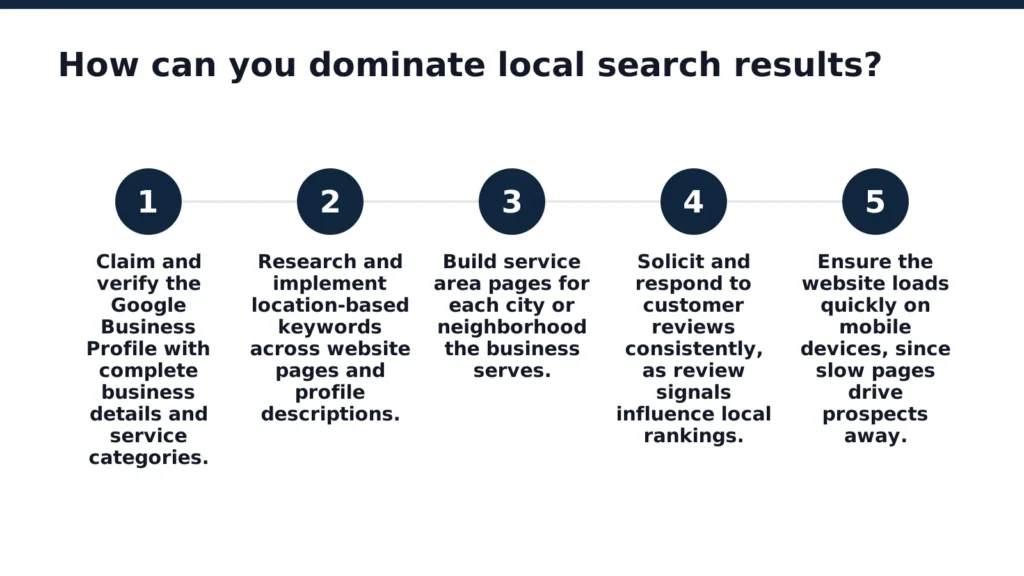
How can you dominate local search results?
Dominating local search results requires a systematic approach to visibility. Home service businesses that appear prominently in local searches capture high-intent customers actively seeking immediate solutions. Without this visibility, contractors lose calls, bookings, and revenue to competitors who show up first.
What makes a Google Business Profile rank higher?
A fully optimized Google Business Profile serves as the foundation of local search dominance. The profile must include accurate business categories, complete service descriptions, and current contact information. Service providers who neglect profile completeness surrender prime real estate in the local map pack. Regular updates with photos and posts signal activity to Google’s algorithm, strengthening the profile’s authority.
How do location-specific keywords drive local traffic?
Targeting localized keywords connects home service businesses with nearby customers ready to hire. A landscaping company in Elk Grove benefits from phrases like “Elk Grove pool builder” rather than generic terms. Service area pages built around specific neighborhoods and cities increase relevance for location-based queries. These pages answer the exact questions local homeowners type into search bars.
Follow this sequence to build local search authority:
Claim and verify the Google Business Profile with complete business details and service categories.
Research and implement location-based keywords across website pages and profile descriptions.
Build service area pages for each city or neighborhood the business serves.
Solicit and respond to customer reviews consistently, as review signals influence local rankings.
Ensure the website loads quickly on mobile devices, since slow pages drive prospects away.
Customer reviews function as trust signals for both search engines and potential clients. A steady stream of positive reviews improves local pack positioning. Homeowners read reviews before calling, and businesses with few or negative reviews lose those opportunities instantly.
A mobile-friendly website with fast load times keeps visitors engaged rather than bouncing to a competitor. Google prioritizes sites that deliver seamless mobile experiences. Contractors whose sites frustrate mobile users sacrifice rankings and conversions simultaneously.
What paid ads work best for contractors?
Contractors increase leads for home service businesses most effectively through three paid advertising channels. Google Local Services Ads capture emergency demand. Social media ads target planned projects. Landing page optimization converts both traffic types into booked jobs.
How do Google Local Services Ads generate emergency leads?
Google Local Services Ads (LSAs) appear at the very top of search results for urgent queries. A homeowner facing a burst pipe or complete HVAC failure sees these ads first. These prospects book immediately and often pay premium rates for rapid response. LSAs connect contractors directly with high-intent emergency leads who need service right now.
Which social media platforms convert project leads?
Hyper-targeted social media advertising reaches homeowners planning high-ticket installations and replacements. These platforms enhance brand recognition and foster customer loyalty through visual storytelling. A roofing contractor showcases completed projects to a neighborhood audience. A pool builder targets households with above-average income and property size. Social media becomes a vital component of modern marketing for contractors pursuing longer sales cycles.
What makes a paid ad campaign profitable?
Friction-free landing pages determine whether ad spend produces revenue or waste. Strong design guides users toward meaningful action. A clear phone number, a simple form, and a single call to action convert clicks into calls. Without this foundation, even well-targeted ads underperform.
Contractors managing three or more locations or scaling beyond $15,000 per month in ad spend benefit from advanced campaign architecture. Lead Nurture Close Web Marketing offers an Enterprise Program built for this level of complexity. The program coordinates multi-location bidding, budget allocation, and conversion tracking across every channel.
How do you turn inquiries into booked jobs?
Turning inquiries into booked jobs requires speed and structured follow-up. A response within five minutes triples close rates compared to slower outreach. Home service contractors lose revenue every hour a lead sits unanswered. The solution combines immediate engagement with automated nurturing that works around the clock.
What happens when a lead gets an instant response?
Speed signals reliability. A homeowner with a burst pipe or failed HVAC system books the first contractor who answers. Emergency leads almost always convert immediately and often pay premium rates for fast service. Delayed responses push those high-value jobs to competitors who picked up the phone.
The LeadNurtureClose 360 CRM integrates calls, texts, and email into one system that captures every lead. No inquiry slips through a crack. The platform triggers instant alerts so staff act within the critical five-minute window.
How do automated workflows keep leads from going cold?
Most inquiries do not book on the first contact. Maintenance leads and project leads require multiple touchpoints before a decision. Automated SMS and email follow-up workflows nurture these prospects over days and weeks. Each message stays relevant to the service requested.
Multi-touch nurturing revives stale quotes and cold estimates. A landscaping estimate sent three weeks ago returns to the top of a homeowner’s inbox with updated availability. A pool builder’s proposal gets a follow-up text when seasonal demand spikes. These automated sequences recover jobs that manual follow-up abandons.
The system tracks every interaction. Contractors see which leads opened an email, clicked a link, or replied to a text. That intelligence directs phone calls to the hottest opportunities first.
How do you measure ROI and scale success?
Measuring return on investment requires tracking Cost Per Acquisition (CPA) across every marketing channel. This metric reveals which campaigns deliver the lowest cost per booked job. Without CPA visibility, home service businesses waste budget on underperforming tactics while competitors capture market share.
Lead Nurture Close Web Marketing provides transparent reporting that connects marketing spend directly to revenue outcomes. The company’s approach attributes booked revenue to specific campaigns, eliminating guesswork from budget decisions. A contractor knows exactly which ads, keywords, or platforms generate paying customers.
What metrics matter most for home service lead generation?
Three metrics form the foundation of ROI measurement. CPA tracks the cost to acquire each new customer. Revenue attribution links closed jobs to their originating campaign. Customer lifetime value projects long-term profitability beyond the initial service call.
How do you scale what's working?
Scaling success follows a structured process:
Identify top-performing campaigns using CPA and revenue attribution data.
Allocate additional budget to channels with proven conversion rates.
Test new hooks, offers, and messaging against current winners.
Adjust targeting based on seasonal demand shifts in the home services market.
Continuous optimization drives sustainable growth. Testing fresh hooks and seasonal offers prevents campaign fatigue. Lead Nurture Close Web Marketing handles this optimization cycle, refining strategies as market conditions change. The result is a lead generation system that grows predictably without constant owner oversight.
FAQ
Why do most lead generation systems fail for home service contractors?
They prioritize volume over quality, causing contractors to chase unqualified prospects while genuine revenue opportunities slip away.
What makes shared lead platforms unreliable?
They distribute the same homeowner inquiry to multiple competitors, triggering a race to the bottom on speed and price.
How does Lead Nurture Close Web Marketing help home service contractors?
It serves home service contractors exclusively, integrating website design, SEO, Google Maps, and social media advertising to capture high-intent prospects.
Conclusion
These three paid channels, combined with instant response and automated nurturing, form a complete lead generation system. Home service contractors who implement this structure capture emergency demand, convert project leads, and recover cold inquiries without constant owner oversight. The next step is auditing your current campaigns against these proven strategies to identify gaps that cost you revenue. Call us today to get started.