
How Local SEO Helps Home Service Businesses Win More Jobs: A Practical Guide
Local SEO is about making your home service business easy to find for nearby customers — and it’s one of the fastest ways to increase qualified leads. This guide explains why local searchers convert at higher rates, which on-site and off-site tactics actually drive calls and booking requests, and how to measure impact with the right KPIs and tools. Many contractors struggle with inconsistent listings, thin local content, and missed review opportunities; here you’ll get practical fixes that turn searches into booked jobs. We cover the core benefits of local SEO, step-by-step Google Business Profile optimization, keyword and on-site tactics for contractors, off-site authority-building, niche tips for garage doors, pools, landscaping, and HVAC, plus the metrics that prove ROI. Each section includes actionable checklists, clear comparisons, and concise how-to steps so you can make improvements right away — or choose a done-for-you option like the Local Business Profile to implement advanced work without pulling more hours from your schedule.
What Are the Key Benefits of Local SEO for Home Service Businesses?

Local SEO drives measurable business results: it increases visibility in the Local Pack, brings higher-intent leads, strengthens trust through reviews, and often beats broad digital channels on cost-per-lead. Search engines match three local signals — proximity, relevance, and reputation — to user intent. When those signals are optimized, your chances of getting calls and bookings rise. Because local searches usually signal purchase intent, investing in local SEO often improves conversion rates and return on ad spend for contractors. Below are the main benefits, written for quick scanning and to help you prioritize.
Local SEO offers the following key benefits:
- Increased Local Visibility: A complete Google Business Profile and focused local pages improve your chance of appearing in the Local Pack and mobile “near me” results.
- Higher-Quality Leads: Local queries often carry commercial intent, yielding more phone calls and form submissions than generic searches.
- Greater Trust and Better Conversion: Consistent NAP details and positive reviews raise click-through and booking rates.
- Lower Cost per Acquisition: Targeting high-intent local keywords typically reduces cost-per-acquisition compared with broader campaigns.
The table below shows which assets deliver each benefit and what owners can expect when they focus on these areas.
| Local Asset | Primary Benefit | Expected Business Outcome |
|---|---|---|
| Google Business Profile | Improves Local Pack visibility and drives direct actions | More calls, direction requests, and profile-driven leads |
| Service-Area Pages | Targets high-intent local search queries | Increased organic landing-page leads and bookings |
| Online Reviews | Strengthens trust and local ranking signals | Higher click-through rates and better conversions |
| Local Citations | Confirms NAP consistency across directories | Fewer ranking issues and stronger map-pack relevance |
Use this comparison to decide what to fix first — then move to the practical mechanics of turning visibility into nearby customers.
How Does Local SEO Increase Visibility and Attract Nearby Customers?
Local SEO aligns your website and profile signals with what searchers want: relevance (service match), distance (proximity), and prominence (reviews and links). Search engines evaluate those signals to choose which businesses appear in the Local Pack, so strengthening each one raises your odds of being shown. For example, detailed service-area pages plus a complete Google Business Profile boost relevance, while consistent citations and local backlinks improve prominence. Mobile optimization matters — many “near me” queries happen on phones — so fast pages and clear click-to-call buttons help turn visibility into immediate contacts.
Audits often reveal gaps: missing attributes, inconsistent NAP entries, or thin service pages. Those findings point straight to the next step: claim and verify your Google Business Profile so you can act on increased visibility.
Why Are Online Reviews and Reputation Crucial for Home Service SEO?
Reviews work two ways: they build trust with potential customers and they serve as a local ranking signal. Review volume, recency, and sentiment influence prominence in local search. A steady stream of recent, authentic reviews gives social proof that increases click-throughs from the Local Pack and improves landing-page conversions. Best practices are simple: ask satisfied customers for reviews soon after the job, use clear compliant request language, and respond promptly and professionally to both praise and complaints. Ethically automating reminders — without incentives — will grow review volume over time and support both visibility and conversion gains. Home service marketing experts will help you with a review strategy for your home service SEO.
A reliable review workflow ties directly into GBP management (messaging, posts, Q&A), so next we’ll walk through claiming and verifying your Google Business Profile.
How to Optimize Your Google Business Profile for Home Service Success?
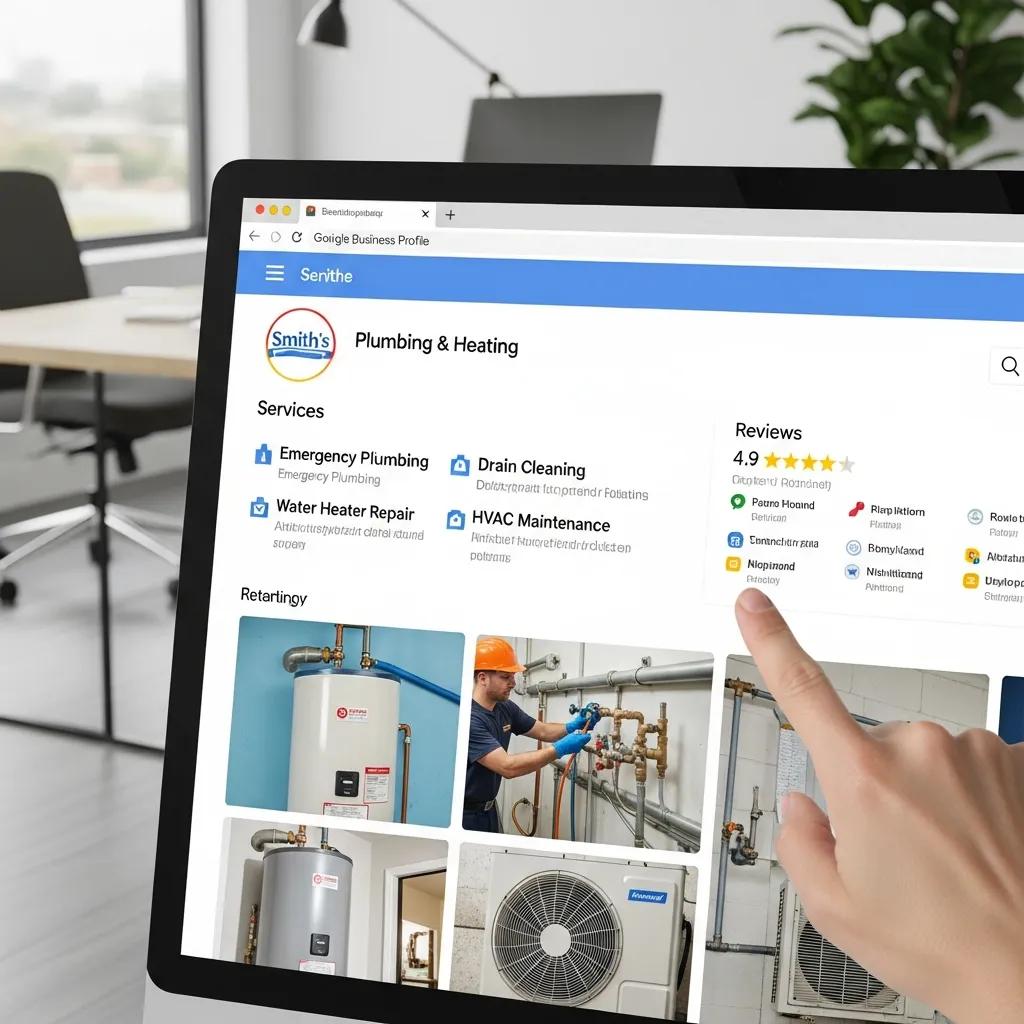
Your Google Business Profile (GBP) is a primary driver of local calls and direction requests. Optimization starts with claiming the listing and verifying ownership, then filling service and category fields, setting service-area details, and using photos and posts to engage searchers. After verification, populate services, categories, hours, attributes, and service areas accurately — these fields feed Google’s matching logic and determine which queries your profile appears for. Keep NAP consistent and stay active on the profile; photos, posts, and Q&A increase engagement and convert visibility into bookings.
The checklist below covers the essential GBP items to complete and maintain.
- Claim and verify your GBP: Secure access so you control profile edits and responses.
- Complete service and category fields: Use specific service names that match local search phrases.
- Add photos and posts regularly: Fresh visuals and timely posts boost engagement.
- Monitor and respond to messages and reviews: Active management signals reliability to customers and Google.
With those items in place your profile will be positioned to collect actions. The next section explains the claiming and verification process step-by-step.
What Are the Steps to Claim and Verify Your Google Business Profile?
Start by signing into the GBP manager with a business account and locating the profile for your business name. Claiming gives you control and helps avoid duplicates. Verification options include postcard, phone, or email depending on the listing; service-area-only businesses should pick the path that matches their model to stay compliant. Common stumbling blocks are duplicate listings, inconsistent NAP that blocks verification, and unsupported verification methods for some service-area operations. Audit directories and fix your NAP before requesting verification to reduce friction. For multi-location businesses, use GBP manager tools and bulk upload templates to streamline verification and avoid conflicts.
Once verified, you can boost engagement with photos, posts, and accurate NAP data — which we cover next.
How to Enhance Your Profile with Photos, Posts, and Accurate NAP Information?
Media and data hygiene matter. Use high-quality photos of staff, vehicles, and finished jobs to build trust and encourage clicks. Photos should show real work and include captions where helpful. Aim for one to two GBP posts per week — promote seasonal services, limited offers, or maintenance reminders — to keep the profile active. Consistent NAP across your site and major directories is critical: use the same business name, address (if listed), phone, and service descriptions so search engines and customers see one clear version.
Good media and clean data form the foundation for effective service-area pages and structured data, which help turn GBP views into website leads.
Which Local SEO Strategies Drive Leads for Home Service Contractors?
Effective local SEO combines focused keyword research, structured service-area pages with schema, technical performance work, and UX that prioritizes click-to-call and quick quote forms. Start by finding high-intent keywords that combine services with locations and emergency modifiers, then create dedicated pages that answer those searcher needs. Use LocalBusiness, Service, and Review schema to clarify offerings for search engines and support rich results. Fast, mobile-friendly pages reduce abandonment and lift conversions. Prioritize high-impact tactics first — GBP optimization, service pages, review generation, and citation audits — so small teams can move the needle without wasting time.
Below is a practical comparison linking strategy to implementation and likely KPI outcomes.
| Strategy | Implementation | Expected Outcome |
|---|---|---|
| GBP Optimization | Complete services, photos, messaging | More calls and GBP-driven actions |
| Citation Building | Audit and fix NAP across directories | Better Local Pack eligibility |
| Service-Area Pages | Create unique city/service pages with schema | Organic traffic and phone/form conversions |
| Review Generation | Automate post-job review requests | Higher ratings and conversion lift |
Use this table to prioritize work. The next section walks through local keyword research tailored to home service niches.
How to Conduct Local Keyword Research for Home Service Niches?
Local keyword research pairs core service terms with local modifiers and intent signals so you target phrases that convert, not just attract visitors. Start with your main services, then add city names, “near me,” and urgency modifiers like “install,” “repair,” “same day,” or “emergency.” Validate phrases with Google Autocomplete and Search Console, and weigh search volume against conversion likelihood — lower-volume, higher-intent terms often produce better leads. Organize keywords by priority and map them to service-area pages and FAQ content that match how local customers search.
Your keyword map feeds directly into on-site tasks like schema and title tags, which the following subsection covers.
What Are Effective On-Site SEO Practices for Contractor Websites?
On-site SEO for contractors focuses on clear service pages, LocalBusiness and Service schema, location-optimized meta tags, and obvious CTAs like click-to-call and quick-quote forms. Build unique city/service landing pages with content that addresses local pain points and includes structured data for services and reviews to improve SERP appearance. Technical basics — fast hosting, compressed images, and mobile-first design — keep pages loading quickly on phones to reduce abandonment during high-intent searches. Make phone numbers prominent and consistently formatted in the header and contact areas so GBP or organic visitors can call immediately.
These on-site fixes reduce friction and make off-site efforts like citations and partnerships more effective at improving rankings.
How to Build Local Authority and Trust Through Off-Site SEO?
Off-site SEO for home services centers on consistent citations, locally relevant backlinks, sponsorships, and proactive reputation management to build prominence. Consistent listings across major directories confirm your NAP and support local relevance. Local backlinks — news mentions, trade associations, or supplier referrals — strengthen prominence in search algorithms. Reputation systems that automate review requests and monitor sentiment help maintain upward rating trends, which supports Local Pack eligibility. When pursuing backlinks, prioritize local relevance and editorial value over volume. Track results to see which partnerships deliver referrals or visibility gains.
Here’s a prioritized checklist of off-site actions to implement.
- Audit and fix citations across major directories: Nail down consistent NAP as the foundation.
- Pursue local partnerships and PR: Earn high-quality, relevant backlinks.
- Implement a review generation and response process: Grow ratings and show responsiveness.
- Monitor referral and organic local traffic: Use data to refine outreach efforts.
These tactics lead into citation specifics, which the next subsection explains in more detail.
Why Are Local Citations and Directory Listings Important?
Local citations are online mentions of your business name, address (when listed), and phone number. They help search engines verify your business and location. For home services, prioritize national data aggregators and industry-specific directories where customers look for contractors. Auditing and correcting inconsistent citations removes confusion for search engines and reduces ranking friction, even when your site and GBP are otherwise optimized. Review additional business directories for contractors.
Tools that crawl and compare citation data make audits faster and remediation simpler.
How to Generate and Manage Online Reviews for Better Rankings?
Create a repeatable review process: ask for reviews at predictable touchpoints, send short follow-up requests, and make it easy for customers to leave feedback — without offering incentives that violate policies. Trigger automated requests after invoicing or job completion, personalize the message to remind customers of the work done, and include clear steps for leaving a review.
Respond to negative feedback quickly and constructively to show service recovery and commitment to customer satisfaction.
Publish strong testimonials on your site using review schema to increase conversion rates from organic landing pages and GBP views.
A steady review pipeline boosts both prominence and trust. Next we’ll cover niche-specific tactics that make these strategies more efficient for different trades.
What Are Niche-Specific Local SEO Approaches for Home Service Industries?
Different trades convert better with tailored content and trust signals. Garage door companies benefit from project galleries and separate repair vs. installation pages. Pool builders need portfolio pages and seasonal offers. Landscapers win with before/after galleries and seasonal guides. HVAC and plumbing businesses should emphasize emergency-service pages and maintenance-plan landing pages to capture recurring revenue. Identify the highest-intent needs for each niche — emergency repair, installation, or maintenance enrollment — and build pages and GBP attributes that match those intents. Visual proof and project pages boost credibility for craftsmanship-focused trades, while HVAC and plumbing should highlight emergency availability and plans to attract recurring customers.
- Garage Door & Pool Builders: Use project galleries and distinct install vs. repair pages to match search intent.
- Landscapers: Publish seasonally targeted local pages and portfolios to show capability and prompt inquiries.
- HVAC & Plumbers: Add emergency-service pages and maintenance-plan landing pages to capture recurring business.
These niche-specific approaches guide content and schema priorities. The next subsections give concrete examples for those verticals.
How to Boost Local SEO for Garage Door Companies and Pool Builders?
Garage door and pool companies get strong returns from project galleries, dedicated landing pages, and seasonal promotions. Create separate pages for installations, repairs, and seasonal services (for example, winterization), and include high-quality before-and-after photos with captions that mention local areas. Use GBP posts for time-limited offers around peak seasons and ask satisfied customers to leave reviews mentioning the project type. Service-area pages help you capture searches in nearby towns, and applying schema to portfolio pages increases the chance of rich results.
Project-focused content drives engagement and leads directly into the next niche: landscapers and HVAC.
What SEO Techniques Work Best for Landscapers and HVAC Businesses?
Landscapers and HVAC businesses benefit from seasonal landing pages, emergency-service schema, and content that promotes maintenance plans to show lifetime customer value. Landscapers should publish localized seasonal guides and highlight property transformations; HVAC companies should emphasize emergency repair pages and clear CTAs for maintenance agreements. Use Service and Maintenance schema and include local testimonials that reference neighborhoods or regions to strengthen relevance. These tactics boost short-term bookings and long-term customer value.
With these niche tactics in place, owners need reliable measurement to keep improving — covered in the next section.
How to Measure and Adapt Your Local SEO Performance Over Time?
Measure local SEO by tracking GBP actions, local pack rankings, organic traffic to service-area pages, and conversion metrics like calls and form submissions. Use Google Search Console, Google Analytics 4, GBP insights, and local SEO tools to monitor keyword performance, page engagement, and profile-driven actions. Set a monthly check for review volume and ratings, quarterly citation and backlink audits, and an ongoing process to refresh seasonal content and service pages. Focus on KPIs tied to revenue — phone leads, booked jobs, completed quotes — so optimization work aligns with business outcomes.
| Metric | What It Shows | Target / Action |
|---|---|---|
| GBP Actions (calls, directions, messages) | Direct customer intent and profile performance | Grow month-over-month; respond to messages within 24 hours |
| Local Pack Rankings | Visibility for priority keywords | Aim for top 3 in target towns; optimize pages for missing queries |
| Organic Landing Page Conversions | Site effectiveness at converting visitors | Track phone/form conversions; test CTAs if low |
| Review Volume & Average Rating | Reputation and trust signals | Increase review count monthly; maintain or improve average rating |
Regular tracking creates a feedback loop to guide content, GBP activity, and outreach. The next part lists the tools and KPIs to use day-to-day.
Which KPIs and Tools Track Local SEO Success for Home Services?
Prioritize GBP actions, Local Pack rank, landing-page traffic, and conversion events as core KPIs. Use Google Search Console, GA4, and local SEO platforms for audits and ongoing monitoring. GBP insights show calls and directions; rank-tracking tools reveal SERP position changes; GA4 helps attribute conversions. Tools like BrightLocal or Semrush Local simplify citation audits and review monitoring. Set benchmarks and run monthly checks so you can see whether tactics are producing measurable leads.
Maintaining a steady audit cadence matters — the final section explains how to stay current with changes.
How to Stay Updated with Google Algorithm Changes and SEO Trends?
Stay current by following official Google communications, reputable SEO sources, and watching Search Console query shifts to spot real impacts. Set up a schedule for audits: monthly for GBP and reviews, quarterly for citations and backlinks, and twice-yearly for full site content reviews. Monitor competitor SERPs and set alerts for brand or priority keyword changes to detect shifts in search behavior early. This proactive approach helps you adapt keywords, content formats, and outreach when the local landscape or Google updates change the rules.
Ongoing measurement and adaptation complete the optimization cycle and also signal when it makes sense to hire help. For owners who prefer a done-for-you option, Lead Nurture Close Web Marketing — specializing in lead generation for home services — offers systems that implement local SEO tactics like the Organic Traffic System and Home Service Website System. These services handle GBP optimization, service-area page creation, citation audits, and automated review workflows so you can focus on running the business while marketing drives qualified leads. To discuss professional execution, contact Don Franklin at Lead Nurture Close Web Marketing and explore a tailored omnipresence plan that converts more local searches into booked jobs.
Frequently Asked Questions
What is the difference between local SEO and traditional SEO?
Local SEO for home services focuses on optimizing a business to attract nearby customers — think GBP, local keywords, and citations. Traditional SEO targets broader visibility across search engines without a geographic emphasis. Both share techniques, but local SEO is tuned to the needs of businesses serving specific areas, which makes it essential for home service providers who want nearby customers to find and contact them. Home service marketing experts will help you navigate optimizing for both local and traditional SEO.
How can I improve my Google Business Profile's performance?
Make sure your GBP is complete and accurate: hours, services, and service areas. Add high-quality photos and regular posts, encourage satisfied customers to leave reviews, and respond to messages and feedback quickly. Those actions improve visibility and credibility, leading to more profile-driven calls and leads.
What role do local citations play in local SEO?
Local citations — listings of your name, address, and phone — help search engines verify your business. Consistent citations across reputable directories increase your chances of ranking higher locally. Incorrect or inconsistent citations confuse search engines and hurt visibility, so audit and fix your citation data regularly.
How often should I update my website for local SEO?
Keep your site fresh: update content at least quarterly for seasonal services, promotions, and local events. Update your GBP more often with new photos, posts, and reviews. Also run regular technical checks for broken links and slow pages. Fresh, relevant content helps SEO and keeps customers engaged.
What are some common mistakes to avoid in local SEO?
Common mistakes include inconsistent NAP across platforms, not claiming or optimizing your GBP, and failing to solicit reviews. Using generic (non-local) keywords, ignoring mobile optimization, and skipping performance tracking are other frequent errors. Regular audits and focused fixes prevent these issues.
How can I measure the success of my local SEO efforts?
Track GBP actions (calls, directions, messages), local pack rankings, organic traffic to service-area pages, and conversion rates from phone and form leads. Use tools like Google Analytics, Search Console, and local SEO platforms to monitor performance and set a regular review cadence so you can adjust strategies based on what’s working.
Conclusion
Local SEO can materially grow your home service business by increasing visibility, attracting higher-quality leads, and building customer trust through a consistent online presence. Start by optimizing your Google Business Profile, fixing citation inconsistencies, and building service-area pages that match how local customers search. If you’d rather outsource execution, our done-for-you systems streamline advanced local SEO so you can focus on operations while marketing delivers qualified leads. Take action now — improve your local presence and turn more searches into booked jobs.