Why Contractors Choose Lead Nurture Close
Too many contractors pay for generic marketing that looks good in reports but fails when customers need fast, local help. That mismatch wastes ad dollars and leaves appointment books empty. This piece breaks down the difference between one-size-fits-all agencies and marketing built specifically for field-service teams. We focus on measurable outcomes—booked jobs, call volume, and cost per lead—use home services businesses as a practical example, and give concrete criteria for evaluating vendors. Read on to see why specialization matters, how an Omnipresence Marketing System ties website, SEO, PPC, and automation into reliable lead flow, which local SEO and PPC moves actually work, and what realistic pricing and ROI timelines contractors should expect.
Specialized Digital Marketing for Home Services

Marketing for home services must target local intent, emergency-driven searches, and direct conversion actions—calls and bookings. Customers search when they need help now, so speed-to-contact and accurate service-area targeting decide whether a lead turns into a job. Contractors get better returns when pages, messaging, and bids are optimized for call-heavy traffic and emergency keywords. Those mechanics explain why broad, generalist approaches usually underdeliver and point to common agency mistakes.
Home service campaigns track different KPIs than e-commerce. Below are the typical gaps where generalist agencies fall short.
- Copy and pages tuned to urgent search intent and clear service-area signals.
- Conversion-first websites and call tracking that measure booked jobs and emergency calls.
- Local SEO work and review velocity that directly affect proximity-based visibility.
These three areas are the foundation of effective campaigns and why vertical expertise produces faster, measurable gains.
Why Do Generalist Agencies Often Fail Home Service Businesses?
Generalist shops usually optimize the wrong metrics—pageviews and impressions rather than calls and confirmed appointments—so they drive traffic that rarely converts to revenue. They lean on generic landing pages and national keyword sets that dilute local relevance, increasing cost per booked job. Critical items like Google Business Profile optimization and review velocity often go unaddressed, hurting local visibility and trust. The fixes are simple: tailored landing pages, localized keyword strategies, and conversion-focused tracking that ties activity back to booked work.
Spotting these failure modes tells you what to demand from any agency proposal.
How Does Industry-Specific Expertise Improve Marketing Results?
Industry expertise speeds results by applying tested templates for service pages, call-first flows, and keyword taxonomies that match real search behavior. Specialists know which terms lead to booked jobs, how to build service-area pages with the right schema, and which call-bidding rules lower cost per booked job. That reduces wasted testing and shortens time-to-value by reusing vertical-proven creatives and bid logic. The payoff: higher conversion rates, clearer attribution, and repeatable growth inside an integrated home service business.
Those gains set up the next topic: why combining website, SEO, PPC, and automation into a single workflow matters.
How Does Lead Nurture Close's Omnipresence Marketing System Outperform Competitors?
Our Home Services Omnipresence Marketing System pairs conversion-first websites, local SEO, targeted PPC, and marketing automation into a continuous optimization loop for field-service contractors. It wins by keeping presence across search, maps, paid listings, and remarketing while using data to sharpen targeting, lower cost per lead, and increase bookings. Integration reduces lead loss by chaining touchpoints—ads that prompt calls, websites that make booking simple, and automation that confirms and nurtures leads—so fewer opportunities slip away. Below is a concise comparison of core components and typical outcomes to make the differences clear.
| System Component | Lead Type | Typical Time-to-Result | Primary KPI |
|---|---|---|---|
| Home Service Website System | Form leads and calls | 2–6 weeks (live pages) | Conversion rate (calls/bookings) |
| Organic Traffic System (SEO) | Organic calls and discovery leads | 3–6 months | Local rank and GBP clicks |
| Paid Traffic System (PPC) | Immediate high-intent calls | Days to weeks | Cost per lead (CPL) |
| Marketing Automation System | Nurtured quotes and booked jobs | Days to implement | Lead-to-booking rate |
This layout shows how each component delivers different lead types and KPIs and frames the workflows we optimize.
What Are the Key Components of the Omnipresence Marketing System?
The system breaks into four practical parts: a Home Service Website System, an Organic Traffic System (SEO), a Paid Traffic System (PPC), and a Marketing Automation System to close the loop. The website emphasizes service pages and booking flows to capture calls and submissions quickly. SEO targets localized content, citation consistency, and Google Business Profile optimization to win the map pack. Paid channels drive immediate demand via search ads and Local Service Ads. Automation reduces leakage with confirmations, reminders, and re-engagement of unbooked leads. Each piece produces measurable outcomes and accelerates iteration—so combined they create compounded lead growth.
Seeing how these parts interact makes it clear why a connected approach outperforms disconnected services.
How Does Integration of SEO, PPC, Website, and Automation Drive Leads?
Integration builds redundancy and consistent messaging so customers have the same experience whether they find you via organic search, paid ad, or a google business profile . PPC captures immediate, high-intent queries while SEO builds lasting visibility for the same keywords. Automation turns otherwise-lost prospects into scheduled jobs. Cross-channel attribution and remarketing let teams re-engage warm prospects and lower cost per booked job by improving lifetime value tracking. That synergy speeds testing and drives incremental conversion lifts that compound over time—making Omnipresence more predictable than isolated tactics.
This combined approach also allows vertical-specific refinements—like those we use for garage door services in the local SEO and PPC sections below.
Why Is Local SEO Critical for Home Service Businesses and How Does Lead Nurture Close Excel?
Local SEO matters because most home service searches are proximity-driven and often urgent; ranking in the map pack and optimizing Google Business Profiles captures a large share of calls and clicks. Local SEO relies on GBP optimization, citation consistency, service-area pages, localized content, and review velocity to win visibility for nearby searches. We prioritize these tactics inside a coordinated plan so contractors capture urgent local demand and convert it into quote requests and booked appointments. The short table below maps common local SEO tasks to implementation and expected impact so you can prioritize work that returns value fastest.
| Local SEO Tactic | Implementation Detail | Lead/Traffic Impact |
|---|---|---|
| Google Business Profile optimization | Complete attributes, categories, photos, posts | Increased map-pack visibility and calls |
| Local citations and NAP consistency | Audit and correct listings across directories | Improved local ranking stability |
| Service-area and localized pages | Geo-targeted content and schema markup | Higher SERP relevance and organic leads |
| Review generation & response | Automated solicitations and timely replies | Better CTR and trust leading to more bookings |
That table highlights the tasks that move the needle and sets realistic timelines used in our tactical checklist.
What Local SEO Strategies Deliver the Best Results for Contractors?
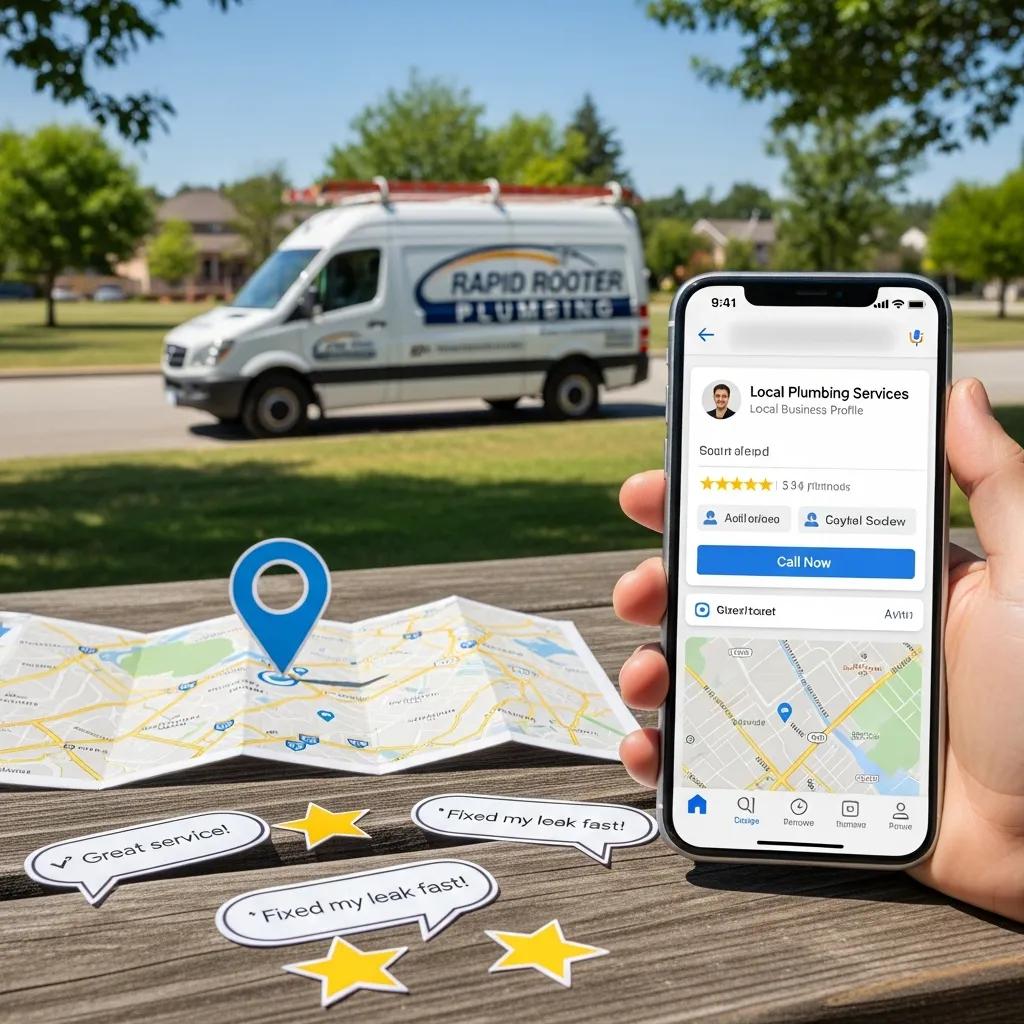
The fastest, most measurable local SEO wins come from Google Business Profile work, review generation, and localized service pages. GBP optimization includes accurate categories, service listings, photos, regular posts, and structured attributes that match searcher intent. Review velocity and timely responses boost rankings and conversion. Service-area pages with schema and clear internal linking capture long-tail queries that convert well. Expect visible GBP improvements in weeks and organic ranking gains in three to six months—timelines you should use when measuring marketing roi.
Knowing time-to-impact for each tactic helps plan and evaluate results without surprises.
How Does Optimizing Google Business Profiles Increase Leads?
Optimizing your Google Business Profile increases leads by improving map-pack placement, raising click-to-call actions, and showing recent trust signals like new reviews and photos. Best practices: complete every profile field, use service-specific categories, publish timely posts, and reply quickly to reviews to boost conversion from searches. Use this GBP checklist to guide implementation and measure the lift in calls and direction requests.
- Complete all profile fields and select accurate service categories.
- Publish weekly posts or timely updates tied to seasonal or emergency services.
- Solicit and respond to reviews quickly to maintain review velocity.
Applying these steps increases the chance a searcher will call or request a quote immediately—and sets the stage for paid tactics that capture highest-intent queries.
What PPC Strategies Does Lead Nurture Close Use to Maximize Lead Generation for Home Services?
Effective PPC for contractors focuses on intent-driven ad types, call-first creatives, Local Service Ads, disciplined negative keyword lists, and landing pages built for immediate service needs. PPC turns search intent into phone calls and booked appointments, so campaigns prioritize ad formats and bids that drive direct actions. We use industry-specific keyword taxonomies, call bid strategies, and automated negative lists to cut waste and lower CPL compared with broad, generalist approaches. The sections below explain how LSAs work and which PPC optimizations produce better efficiency than typical competitor setups.
These paid tactics work with local SEO and automation to capture short-term demand while building longer-term lead flow for home services businesses.
How Do Google Local Service Ads Benefit Home Service Contractors?
Google Local Service Ads place businesses at the top of results for high-intent local searches and work on a pay-per-lead model that can deliver immediate calls and messages. LSAs carry trust signals like the Google Guaranteed badge, which boosts conversion for first-time callers. Setup requires verification and ongoing profile management; once live, LSAs can produce inbound calls within days for common emergency and scheduled-service searches. Their fast lead velocity makes local services ads an essential layer in a contractor’s paid home services strategy.
LSAs complement search and organic channels by delivering quick, qualified leads.
What Makes Lead Nurture Close's PPC Campaigns More Effective Than Competitors'?
Our PPC work focuses on vertical-specific keyword taxonomies, call-focused ad copy, service-tailored landing pages, and automated negative lists to eliminate irrelevant spend. Better ad-to-landing-page relevance improves Quality Score, lowers CPC, and lifts ad position—resulting in more calls per dollar. Continuous A/B testing of call extensions, ad schedules, and bid modifiers targeted to job-ready hours increases ROI versus broader campaigns. These optimizations reduce CPL and cost per booked job while supporting reputation strategies that help both paid and organic channels.
Regular campaign tuning and landing-page alignment keep CPLs lower and booking rates higher over time.
How Do Reputation Management and Online Reviews Influence Contractor Marketing Success?
Reputation and reviews matter because customers depend on social proof when hiring local services, and review signals feed local ranking algorithms. A steady flow of positive reviews increases clicks, boosts conversion on Google Business Profiles, and signals trust to both search engines and prospects. Effective reputation programs combine automated review requests, monitoring, and a response playbook. The list below summarizes why reviews matter and which actions drive results for homeowners.
- Trust Signal: Reviews shorten the sales cycle by building confidence.
- Local Ranking Influence: Quantity and velocity of reviews improve local visibility.
- Conversion Lift: Higher ratings and recent feedback increase clicks and bookings.
These outcomes link directly to the operational steps we recommend for reputation management.
Why Are Online Reviews Vital for Home Service Businesses?
Online reviews are vital because the vast majority of customers check reviews before hiring a service provider. For local searches, star rating and recency heavily influence who gets the call. Reviews raise conversion by lowering perceived risk, and review volume plus response behavior correlate with ranking signals that drive organic visibility. Practical steps: ask for reviews after every job, respond quickly to negative feedback to limit harm, and showcase testimonials on service pages to boost booking confidence. Automate this workflow so crews can focus on jobs, not outreach.
Automating review requests and responses keeps momentum steady while technicians stay productive.
How Does Lead Nurture Close Manage and Improve Contractor Reputations?
We run an automated workflow that requests reviews after service, monitors mentions across platforms, and provides response templates—escalating serious issues for human follow-up. That process increases review velocity and average ratings while keeping requests authentic and simple for customers. Expected outcomes include more reviews, higher star averages, and improved local rankings that turn into more organic calls and booked jobs. A managed review program complements SEO and PPC and helps sustain lead volume growth.
This reputation work ties directly into ROI conversations contractors need when assessing marketing investments.
What Are the Pricing Models and ROI Expectations When Choosing Lead Nurture Close?
Contractors should compare pricing models—retainer, pay-per-lead, and hybrid—based on expected outcomes, contract terms, and ROI timelines. Clear alignment between cost and KPIs is essential for predictable results. Retainers work for businesses that want a full-service strategy and ongoing optimization. Pay-per-lead suits teams that want direct control over lead volume. Hybrids pair a base retainer with performance fees to balance risk and reward. With our Home Services Omnipresence Marketing System expect channel timelines like: days for PPC/ local services ads, weeks for google business profile improvements, and months for organic SEO. The table below clarifies common models and typical ROI horizons.
| Pricing Model | Cost Structure | Expected ROI / Typical Contract Length |
|---|---|---|
| Retainer | Monthly fee for managed services | ROI in 3–6 months; 6–12 month contracts typical |
| Pay-per-lead | Payment per qualified lead | Faster spend-to-lead clarity; ROI depends on lead quality |
| Hybrid | Base retainer + performance-based fees | Balanced risk and long-term optimization; ROI in 2–4 months |
Use this guide to match cash flow and risk tolerance to a model that supports predictable lead generation.
How Does Lead Nurture Close's Pricing Compare to Generalist and Niche Agencies?
Specialized providers often charge more than generalists, but that premium usually pays for itself through better unit economics—higher conversion rates and lower cost per booked job. Compared with single-channel niche firms, an integrated Omnipresence approach can deliver stronger ROI by capturing immediate demand while building long-term organic growth, reducing dependence on continuous paid spend. When evaluating proposals, ask for CPL, lead-to-job conversion rates, and example timelines to booked jobs—those numbers reveal real value more clearly than sticker price.
Insisting on clear metrics in proposals makes comparing offers and setting realistic ROI expectations far easier.
What Metrics Demonstrate Marketing ROI for Home Service Contractors?
Track cost per lead (CPL), cost per booked job, lead-to-job conversion rate, average job value, customer acquisition cost (CAC), and lifetime value (LTV). CPL and lead-to-booked-job conversion give the most direct view of campaign efficiency; CAC and LTV show whether acquisition costs are sustainable. Require regular reporting on these KPIs with channel attribution and a set reporting cadence so performance stays transparent and optimizable. Focusing on these numbers ties marketing investment directly to net revenue.
These KPI-driven conversations complete the practical guidance contractors need to evaluate specialized marketing partners.
Frequently Asked Questions
What types of businesses benefit most from specialized digital marketing?
Home service businesses—plumbing, electrical, HVAC, garage doors, and similar trades—benefit most from specialized marketing. These industries face urgent, location-based demand where local SEO, emergency-driven keywords, and conversion-first tactics make the biggest difference. A vertical approach delivers higher visibility and better conversion than a generic playbook.
How can contractors improve their Google Business Profile for better visibility?
Fill every profile field, choose precise service categories, list accurate hours and contact details, and post regular updates or promotions. Encourage satisfied customers to leave reviews and respond quickly to feedback. These steps boost credibility and improve the chance of appearing in the local map pack.
What is the importance of keyword research in PPC campaigns for contractors?
Keyword research identifies the high-intent terms customers use when they need service. Targeting those terms with focused ads increases click-through and conversion rates. Negative keyword lists remove irrelevant traffic, keeping spend efficient and lowering cost per lead.
How does marketing automation benefit home service contractors?
Automation streamlines follow-up: confirmations, reminders, and nurture sequences that reduce no-shows and re-engage unbooked leads. It keeps prospects moving toward a booking without burdening office staff, improving conversion and freeing teams to focus on jobs.
What are the expected timelines for seeing results from local SEO efforts?
Expect early improvements from GBP and citation fixes in weeks, and more substantial organic gains in three to six months. Timelines vary by market competitiveness and starting point, so set expectations based on baseline performance and agreed KPIs for home services businesses.
What should contractors look for in a digital marketing agency?
Prioritize agencies with home services experience, transparent reporting tied to KPIs like CPL and booked jobs, and a comprehensive approach that includes local SEO, PPC, and reputation management. Avoid one-size-fits-all playbooks and demand examples of measurable results.
What are the benefits of using an Omnipresence Marketing System for home service contractors?
An Omnipresence Marketing System coordinates SEO, PPC, and automation so contractors show up where local customers search. That mix captures immediate calls and builds longer-term organic leads, tightens targeting to lower CPL, and creates a continuous optimization loop that improves results over time—delivering steadier, more predictable lead flow.
How can home service contractors measure the effectiveness of their digital marketing efforts?
Measure with CPL, conversion rate, lead-to-job conversion, and CAC. Regular channel-level reporting and trend analysis show which tactics produce booked jobs and where to shift budget for better profitability.
What role do online reviews play in the success of home service contractors?
Reviews drive trust, clicks, and local rankings. Positive, recent reviews increase CTR and conversions; review velocity helps rank for proximity searches. Actively request reviews, respond promptly, and feature testimonials to boost booking confidence for home services businesses.
How does local SEO differ from general SEO for home service businesses?
Local SEO targets geographically specific searches—map-pack placement, GBP optimization, and citation consistency—while general SEO targets broader queries. For contractors, local SEO ties much more directly to calls and booked jobs because demand is location-based.
What are the common pitfalls contractors should avoid when choosing a digital marketing agency?
Avoid agencies that use a single playbook for every client. Choose partners with home services experience, transparent reporting linked to booked jobs, and a focus on conversion metrics over vanity KPIs like pageviews. Confirm they actively manage google business profile and review programs—those elements materially affect local performance.
How can contractors effectively utilize PPC advertising to generate leads?
Use PPC to catch high-intent searches: prioritize call-first ads, Local Service Ads, and landing pages aligned to emergency and scheduled services. Add negative keywords to cut waste and test ad schedules and bid modifiers for job-ready hours. Ongoing monitoring keeps CPL low and lead quality high.
Conclusion
Adopting a specialized, integrated marketing strategy that matches local intent and emergency-driven demand produces faster, more predictable results. When SEO, PPC, conversion-focused websites, and automation work together in an Omnipresence Marketing System, contractors gain consistent visibility and measurable outcomes: more booked jobs and lower cost per lead. To succeed, understand your vertical’s needs, insist on clear KPIs, and choose partners who can prove real, repeatable marketing roi. Ready to see what a tailored plan can do for your business today?