Home Service Contractor Web Design: 6 Ways To Create A Website That Keeps Homeowners Interested
75% of homeowners judge a contractor’s credibility by a website’s design, making web design a strategic asset for growth.
Ask AI About This Guide
Opens your AI assistant with a question ready to send.
The Importance of Credibility in Web Design
Research indicates that a significant majority of users assess a business’s credibility based on the design of its website. A professional and well-designed site is crucial for establishing trustworthiness and preventing potential customers from being deterred by a lacking design.
This research directly supports the article’s opening statement that 75% of homeowners judge a contractor’s credibility by a website’s design, making web design a strategic asset for growth.
For home service contractors, a custom-designed website aligned with brand identity, intuitive navigation, and SEO not only retains visitors but also generates qualified leads. In this guide, we’ll explore six proven ways—from foundational design features and content strategy to performance optimization, SEO best practices, and continuous updates—to keep homeowners engaged and drive business growth. Along the way, you’ll see how Lead Nurture Close’s Home Service Web Design subscription delivers brand-specific sites with unlimited updates, ongoing SEO, and AI-powered enhancements that evolve as your business scales.
Unlock Homeowner Trust with Engaging Contractor Website Design
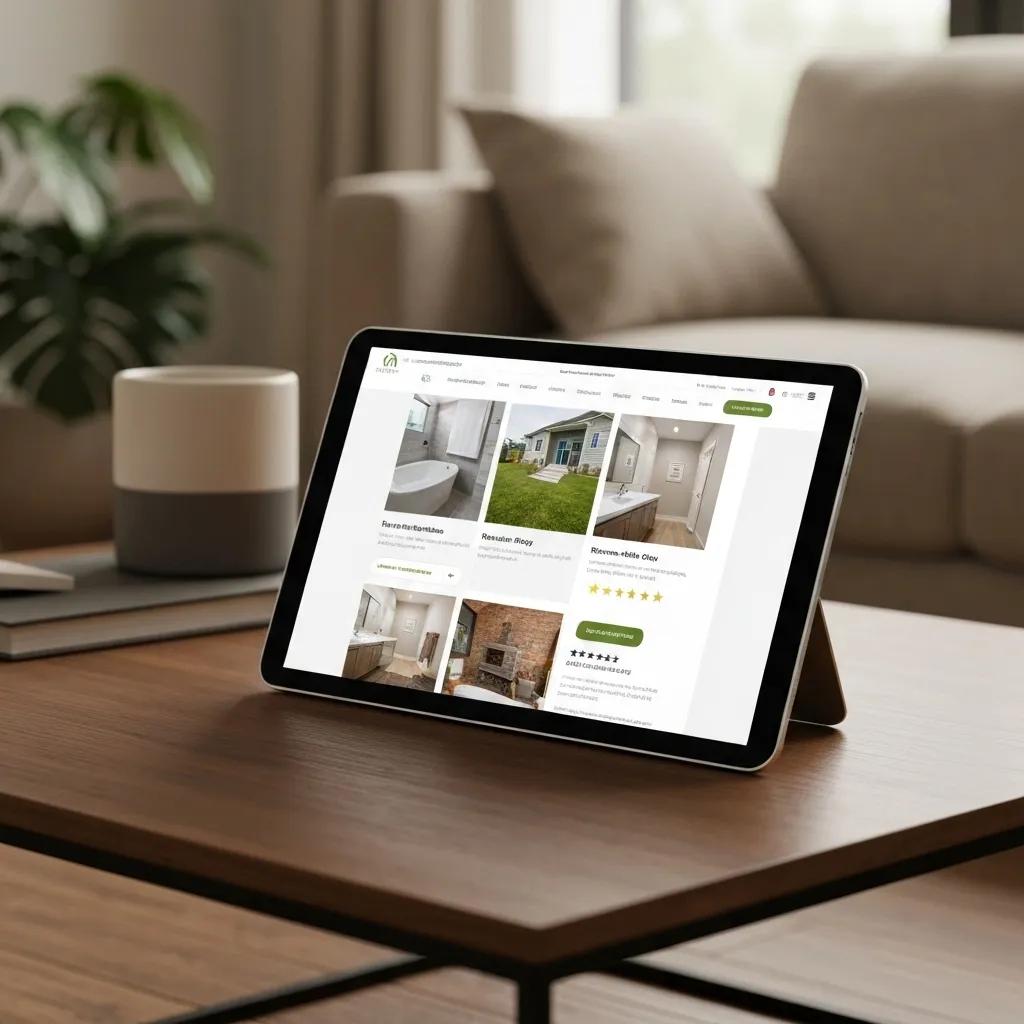
An engaging home service contractor website combines intuitive layouts, trust-building visuals, and clear calls-to-action to guide homeowners toward booking. By structuring your site around user behavior, you create frictionless paths from landing to contact, boosting both satisfaction and lead generation.
- Intuitive Navigation: Simplifies access to service pages and contact options.
- Responsive Layout: Ensures consistent presentation across devices.
- Branded Visuals: Reinforce professionalism and local relevance.
- Service Highlights: Presents core offerings with concise descriptions.
- Trust Signals: Showcases licenses, guarantees, and reviews.
Integrating these foundational features sets the stage for a robust content strategy that keeps homeowners exploring your service pages.
How Does Clear Navigation Improve Homeowner Experience?
Clear navigation improves homeowner experience by reducing the steps needed to find services, which increases time on site and lowers bounce rates.
- It guides users directly to relevant service pages in one or two clicks.
- It highlights emergency or priority services at the top of menus.
- It creates familiar patterns across pages so homeowners know where to look next.
Optimized navigation fosters engagement and primes visitors for mobile-friendly layouts.
Why Is Mobile Responsiveness Crucial for Contractor Websites?
Mobile responsiveness ensures your site adapts fluidly to smartphones and tablets, which 70% of homeowners use to find local services. A responsive design: responsive web design essentials
- Improves readability and button accessibility on small screens.
- Boosts search rankings as mobile-first indexing becomes standard.
- Reduces frustration by eliminating pinch-zoom and horizontal scrolling.
Home Service Consumer Behavior: Mobile Search and Trust Signals
A substantial portion of home service inquiries, approximately 70%, originate from mobile searches, underscoring the critical need for mobile-optimized websites. Furthermore, trust signals such as online reviews are highly influential, with 66% of consumers reporting they buy more often when trust signals are present, and 82% of homeowners considering Google reviews essential when selecting a general contractor.
This research supports the article’s emphasis on mobile responsiveness, the crucial role of customer testimonials and reviews, and how these elements collectively enhance engagement and conversion for home service contractors.
Prioritizing responsive layouts keeps visitors on the page longer and transitions seamlessly into trust-building visuals.
What Role Do Visuals and Branding Play in Building Trust?
Brand-specific imagery and consistent styling build homeowner confidence by demonstrating professionalism and local expertise. Effective visuals:
- Feature real project before-and-after photos to showcase skills.
- Use color schemes and typography that reflect your company identity.
- Include team portraits and branded graphics to humanize your business.
By aligning visuals with branding, you reinforce credibility and prepare homeowners to engage with your content strategy.
How Can Content Strategy Keep Homeowners Interested on Contractor Websites?
A targeted content strategy educates homeowners, addresses their pain points, and showcases your expertise—transforming casual visitors into qualified leads. By delivering localized, helpful articles and service guides, you create multiple entry points for organic search and social sharing.
- Service How-Tos: Step-by-step articles on common repairs and maintenance.
- Local Insights: Neighborhood project spotlights and seasonal tips.
- Testimonials: Real homeowner success stories with before-and-after visuals.
- Portfolio Galleries: Curated collections of completed jobs by service type.
An effective content framework boosts SEO equity and leads directly into optimized conversion elements.
What Types of Content Do Homeowners Find Most Helpful?
Homeowners find practical guides and visual case studies most helpful because they demonstrate problem-solving skills and project outcomes.
- DIY Maintenance Tips that homeowners can try before calling a contractor.
- Cost Breakdown Tables that outline average expenses by job type.
- Video Walkthroughs showing safety procedures and craftsmanship.
Practical content establishes authority and transitions naturally into localized engagement techniques.
How Does Localized Content Enhance Engagement?
Localized content that references neighborhoods, landmarks, and community events resonates with homeowners by demonstrating area expertise.
- It builds trust by showing you understand local regulations and weather challenges.
- It leverages geo-targeted keywords to improve search visibility in your service area.
- It encourages sharing among community members when content feels personally relevant.
By weaving local insights into your posts, you deepen homeowner connection and prepare the ground for social proof through reviews.
Why Are Customer Testimonials and Reviews Essential?

Customer testimonials and star-rated reviews provide social proof that validates your workmanship and reliability. Positive reviews:
- Highlight specific project outcomes and customer satisfaction.
- Address common homeowner concerns, such as punctuality and cleanup.
- Improve click-through rates when displayed in search results.
Leveraging reviews reinforces credibility and leads directly to conversion-boosting design elements.
Which Website Design Elements Boost Conversion for Home Service Contractors?
Conversion-focused design elements guide homeowners from exploration to contact with minimal friction. By emphasizing prominent CTAs, streamlined forms, and clear trust badges, you significantly increase lead submissions and consultation bookings.
| Design Element | Key Attribute | Conversion Impact |
|---|---|---|
| Call-to-Action Buttons | High-contrast placement | 25–35% increase in clicks |
| Contact & Booking Forms | Minimal fields, multi-step UX | 20% higher form completion rate |
| Trust Signals & Guarantees | License badges, warranties | 40% boost in homeowner confidence |
How Do Clear Calls-to-Action Drive Homeowner Interaction?
Clear calls-to-action drive interaction by giving homeowners explicit next steps and benefits, prompting immediate engagement.
- Use action-oriented verbs like “Schedule Your Free Estimate” or “Book Emergency Service.”
- Place buttons above the fold and at meaningful scroll depths.
- Pair CTAs with concise benefit statements, such as “Fast Response Guaranteed.”
Well-placed CTAs channel homeowner interest into measurable actions like consultation bookings.
What Are the Best Practices for Contact Forms and Booking Features?
Optimized forms reduce abandonment and encourage submissions by balancing data collection with usability. Best practices include: marketing automation system
- Limiting required fields to essential information (name, phone, service type).
- Using multi-step progress indicators for longer forms to reduce overwhelm.
- Enabling calendar integration and appointment selection within the form.
Streamlined booking features shorten the path from inquiry to scheduled service.
How Can Trust Signals Like Licenses and Guarantees Increase Conversions?
Displaying professional licenses, insurance certificates, and service guarantees enhances homeowner confidence by demonstrating accountability. Trust signals:
- Include visible badges for state licensing and insurance coverage.
- Highlight satisfaction or money-back guarantees on service pages.
- Feature professional association logos to underscore credibility.
Reinforcing trust through these signals cultivates homeowner willingness to submit a lead form.
How Does Website Speed and Performance Affect Homeowner Retention?
Fast loading times and smooth interactions directly influence homeowner patience, search rankings, and overall conversion rates. By optimizing media and leveraging performance tools, you create a seamless user experience that keeps visitors on your site longer.
| Optimization Technique | Performance Metric | Impact |
|---|---|---|
| Server-side Caching | Time to First Byte | Up to 50% faster load speed |
| Image Compression | Page Weight | 30–60% reduction in file size |
| Minification & Bundling | Total HTTP Requests | Fewer requests, under 20 ms each |
Why Is Fast Loading Time Important for Contractor Websites?
Fast loading time is important because a one-second delay can reduce conversions by 7%, and homeowners expect service information within two seconds.
Impact of Page Load Time on Website Performance and Conversion Rate
Studies consistently show that website loading speed significantly influences user behavior and conversion rates. A delay of just one second in page response can lead to a 7% reduction in conversion rates, emphasizing the critical role of fast loading times in retaining user interest and driving sales.
This citation verifies the article’s claim that a one-second delay can reduce conversions by 7%, highlighting the importance of fast loading times for homeowner retention and business growth.
Speed:
- Reduces bounce rate on both desktop and mobile.
- Signals reliability and professionalism before any content is read.
- Aligns with Google’s page experience signals for ranking.
Prioritizing speed optimization lowers friction and directs focus toward your service offerings.
How Can Optimizing Images and Media Improve Site Speed?
Optimizing images and media reduces page weight and accelerates load times without sacrificing visual quality.
- Convert graphics to modern formats like WebP or AVIF.
- Implement lazy loading to defer off-screen assets.
- Use responsive image attributes to serve the correct resolution per device.
Efficient media handling boosts speed and enhances user experience across varied network conditions.
What Tools Help Monitor and Maintain Website Performance?
Regular performance audits ensure your site retains optimal speed and responsiveness as content evolves. Essential tools include:
- Google PageSpeed Insights for real-time performance scoring and recommendations.
- WebPageTest for in-depth waterfall analysis and first-byte metrics.
- Lighthouse audits integrated within Chrome DevTools for progressive web app scoring.
Continuous monitoring through these platforms safeguards performance standards and supports SEO efforts.
What Role Does SEO Play in Attracting Homeowners to Contractor Websites?
SEO elevates contractor websites in search results by aligning content, code, and entities with homeowner queries about local services. Semantic keyword strategies, structured data, and logical site architecture work together to improve visibility and drive organic traffic.
- Semantic Keyword Clusters: Target long-tail phrases like “HVAC company website design” and “plumbing contractor web design services.”
- Structured Data Markup: Implement Service and LocalBusiness schema on service pages.
- Internal Linking: Use descriptive anchors to guide crawlers and homeowners through your service taxonomy.
A holistic SEO approach converts searchers into inquiries and leads seamlessly.
How Can Semantic Keywords Improve Search Visibility?
Semantic keywords improve visibility by capturing multiple homeowner intents and related search variations, leading to broader SERP coverage.
- Research hyponymous phrases such as “roofing contractor website examples” and “small business contractor website.”
- Integrate co-occurring terms like “responsive design,” “lead generation,” and “local SEO.”
- Map keywords to specific pages and headings to reinforce topic clusters.
Leveraging semantic clusters ensures you rank for relevant homeowner queries in your service area.
Why Is Structured Data Important for Contractor Websites?
Structured data signals to search engines exactly what your pages represent—services, reviews, locations—unlocking rich snippets that increase click-through rates.
- Service schema highlights your web design offering and subscription model.
- AggregateRating schema displays star ratings from customer reviews.
- LocalBusiness schema provides NAP details for Google’s knowledge panel.
Accurate markup accelerates trust signals in SERPs and draws homeowner attention to your listings.
How Do Internal Linking and Entity Anchors Enhance User Navigation?
Internal linking with entity-rich anchor text connects related service pages and content clusters, guiding homeowners and search bots through your site.
- Link from blog posts on “mobile responsiveness” to your dedicated responsive design page.
- Use anchors like “contractor website lead generation tips” to point to CRO guides.
- Maintain a hub-and-spoke structure that reinforces your primary Hub page.
A coherent internal linking framework boosts dwell time and topical authority.
How Can Ongoing Website Updates Keep Homeowners Engaged Long-Term?
Regular website updates signal freshness to search engines and homeowners alike, sustaining engagement and driving repeat visits. By scheduling new content, monitoring entity trends, and soliciting feedback, you ensure your site evolves with homeowner needs and search algorithms.
- Editorial Calendar: Plan seasonal tips, project spotlights, and service announcements.
- Entity Tracking: Use SEO tools to monitor emerging local service queries.
- Feedback Loops: Embed surveys and comment prompts to capture homeowner input.
Continuous updates transform a static brochure into a dynamic resource that homeowners trust over time.
What Are Effective Strategies for Regular Content Updates?
- Refresh service pages with new project photos and updated service details quarterly.
- Repurpose high-traffic blog posts into video or infographic formats bi-annually.
- Add localized case studies after completing major community projects.
A disciplined update cadence boosts both homeowner interest and search rankings.
How Does Tracking Semantic Entities Help Website Evolution?
Tracking semantic entities reveals shifts in homeowner search behavior and industry terminology, guiding content adjustments.
- Monitor keyword trends for new service types like “smart home plumbing integrations.”
- Update pages when local regulations or building codes change.
- Adjust on-page entity references to align with evolving homeowner questions.
Entity monitoring ensures your site remains semantically aligned with homeowner intent.
Why Is User Feedback Important for Continuous Improvement?
User feedback uncovers UX bottlenecks, content gaps, and trust concerns that analytics alone can miss. Soliciting feedback:
- Reveals real-world visitor pain points for navigation or form processes.
- Highlights content areas homeowners want more detail on.
- Provides direct quotes for testimonial and review updates.
Integrating homeowner insights into your update cycle refines user experience and trust signals.
Home service contractors who build websites with intuitive design, strategic content, streamlined conversion paths, fast performance, and robust SEO will captivate homeowners and drive consistent leads. By treating your site as a living asset—with ongoing updates guided by semantic entity tracking and user feedback—you foster long-term engagement and growth. Lead Nurture Close’s Home Service Web Design subscription empowers contractors with unlimited updates, AI-enhanced optimizations, and dedicated SEO support so your website evolves as your business scales. Contact us today to discover how a partnership can transform your online presence and generate qualified homeowner inquiries.